A small start today can become something you are very glad you began.
“A year from now, you may wish you had started today.” Karen Mayham
I like this quote because it gets right to the point.
There are things I know I would be better off starting now, even if I still feel a little uncertain about them. Sometimes that uncertainty makes it easy to wait. Another week feels harmless. Another month does too. Before long, something that could have quietly been growing has simply stayed where it was.
That is the part of this quote that gets my attention.
This week, I am trying to think less about the perfect time to begin and more about whether I will be glad I started. That feels like a better question.
I do not need a huge breakthrough to move forward. I do not need to have every detail settled. I just need to stop assuming that waiting will automatically make things easier.
Sometimes it does. Often it does not.
A lot of the things that become worthwhile later begin in a very ordinary way. They begin with a conversation, a decision, a fresh attempt, or a little bit of follow through that would have been easy to delay one more time.
That is the mindset I want to carry into this week.
What is something I would be glad I started by this time next year?
I think that is a good Monday question.
Maybe there is something like that for you too. Not something dramatic. Just one thing worth stepping toward now instead of later.
A year from now may feel far away, but it has a way of arriving faster than we expect.
The national housing market may become a little more active during the second half of 2026 without producing a major change in home values.
That is the central takeaway from Zillow’s newly released midyear forecast. Zillow expects its measure of existing-home sales to increase 1.2% from 2025, reaching approximately 3.8 million sales. At the same time, it forecasts typical U.S. home values to finish the year about 0.2% lower.
What I find interesting is the combination. We could see more people moving without seeing the sharp price increase or widespread decline that often dominates housing conversations.
A market can move without making a dramatic turn
Housing activity does not require prices to surge. Transactions can increase because slightly better affordability brings some buyers back, because homeowners finally decide they have waited long enough, or because personal circumstances make a move necessary.
Those buyers and sellers may become more active while remaining careful about price and monthly cost. That produces a market with more movement, but not necessarily more urgency.
Zillow also notes that regional inventory differences are creating very different conditions across the country. That qualification is especially important when applying a national forecast to Spokane or Coeur d’Alene.
What could this mean for Spokane and Coeur d’Alene?
National numbers provide context, but they are not a local price prediction. The Inland Northwest has its own mixture of limited housing supply, changing affordability, population movement, and wide differences among neighborhoods and price ranges.
A buyer looking for an attainable single-family home may encounter more competition than someone shopping at a higher price point. Likewise, a properly priced home in good condition may attract attention quickly, while another home nearby can remain available if buyers believe its price does not match its condition or location.
That is why broad descriptions such as “buyer’s market” or “seller’s market” are often less useful than they appear. The better question is what buyers are doing within the specific segment where a home will compete.
A more measured opportunity for buyers
A nearly flat national price forecast does not necessarily suggest that buyers should wait for a large correction. It may instead create a period in which buyers have enough time to compare options, complete careful inspections, and evaluate whether the payment fits comfortably.
Some homes will still receive multiple offers, particularly where inventory remains limited. Others may offer room to negotiate on price, repairs, closing costs, or timing.
The opportunity may be found in the details of an individual property rather than in a dramatic change across the entire market.
Pricing becomes even more important for sellers
For sellers, a more balanced environment places greater weight on the initial asking price. Buyers can recognize the difference between a home that reflects current conditions and one that is priced according to an earlier market.
This does not mean sellers need to underprice their homes. It means recent comparable sales, current competition, condition, and buyer response should guide the strategy.
When price growth is limited, buyers are less likely to overlook a gap between price and value because they assume the market will quickly catch up.
The local market will tell the fuller story
Zillow’s forecast does not point toward a housing boom or a collapse. It suggests a slower adjustment in which affordability improves somewhat, sales recover modestly, and regional differences remain important.
For Spokane and Coeur d’Alene buyers and sellers, that may make the second half of 2026 less about predicting the next major market turn and more about understanding the conditions immediately in front of them.
The national numbers can set the stage. The local inventory, recent sales, and buyer activity will tell us what is actually happening.
“The most effective way to do it, is to do it.” Amelia Earhart
I like this quote because it does not leave much room for hiding.
It is simple, direct, and a little uncomfortable in the best way.
There are times when I can spend more energy thinking about something than actually doing it. I can turn a task over in my mind, wait for a better moment, or convince myself I need just a little more clarity before I begin. Sometimes that is wisdom. Sometimes it is just hesitation dressed up to look more respectable.
This week, I’m trying to remember that progress usually begins when I stop hovering and start moving.
Not perfectly. Not all at once. Just honestly.
There is something freeing about that. The pressure eases when the goal is no longer to have everything figured out before I begin. The goal becomes simpler. Start where I am. Do what is in front of me. Let the next step come after that.
A lot of life works this way.
Momentum often comes after the start, not before it. Clarity often shows up after we begin, not while we are still standing still. The beginning may feel small, but it changes something. It breaks the spell of delay.
That is the reminder I’m carrying into this week.
If there is something in front of you that needs attention, maybe today is a good day to begin. Not because everything is lined up perfectly, but because starting is often what opens the door to what comes next.
Sometimes the most effective way to do it really is to do it.
A Motivation Monday reflection on Amelia Earhart’s quote, “The most effective way to do it, is to do it,” and the value of taking the first step instead of overthinking.
Every season has its own personality in real estate.
Spring often brings excitement as new listings begin appearing, while summer tends to offer something many buyers have been waiting for: more choices.
According to recent housing data from the National Association of REALTORS®, inventory typically increases during the summer months, giving buyers additional opportunities to compare homes before the market begins slowing toward fall. While every local market behaves differently, this seasonal pattern is common across many areas.
For buyers, an increase in available homes doesn’t necessarily mean prices are dropping dramatically. Instead, it often means there are simply more options to consider. Rather than feeling pressure to make a decision after seeing only one or two homes, buyers may have the opportunity to compare neighborhoods, layouts, and features before writing an offer.
For sellers, this isn’t a signal to become discouraged.
Well-maintained homes that are priced appropriately and marketed professionally continue to attract serious buyers. In fact, increased inventory often means motivated buyers have become more active because they finally have enough homes to evaluate.
A slight increase in available homes can create new opportunities for buyers while well-prepared sellers continue to attract strong interest.
Here in the Spokane and Coeur d’Alene area, local market conditions can differ significantly from national trends. School schedules, neighborhood demand, inventory levels, and pricing all influence how quickly homes sell and how buyers respond.
That’s why it’s helpful to look beyond national headlines and understand what’s happening in your own community.
Whether you’re planning to buy this summer, sell later this year, or simply stay informed, understanding seasonal patterns can help you make decisions with greater confidence.
Real estate isn’t just about timing the market perfectly. It’s about recognizing opportunities when they fit your goals.
If you’re wondering how today’s market compares with your neighborhood, I’d be happy to share what I’m seeing locally and answer any questions you have.
As this week begins, one thing I’m reminding myself is that progress doesn’t always announce itself. Most of the time, it arrives quietly.
It’s another conversation. Another morning when you decide to keep going. Another opportunity to improve something just a little more than yesterday.
Looking back, it’s interesting how many things that once felt out of reach eventually became part of everyday life. Not because of one extraordinary moment, but because of countless ordinary ones that slowly accumulated over time.
That’s what I hope to remember this week.
“Little by little, a little becomes a lot.”
Whether you’re chasing a personal goal, learning a new skill, building a business, or simply trying to become a better version of yourself, I hope this week gives you one more small step in the right direction.
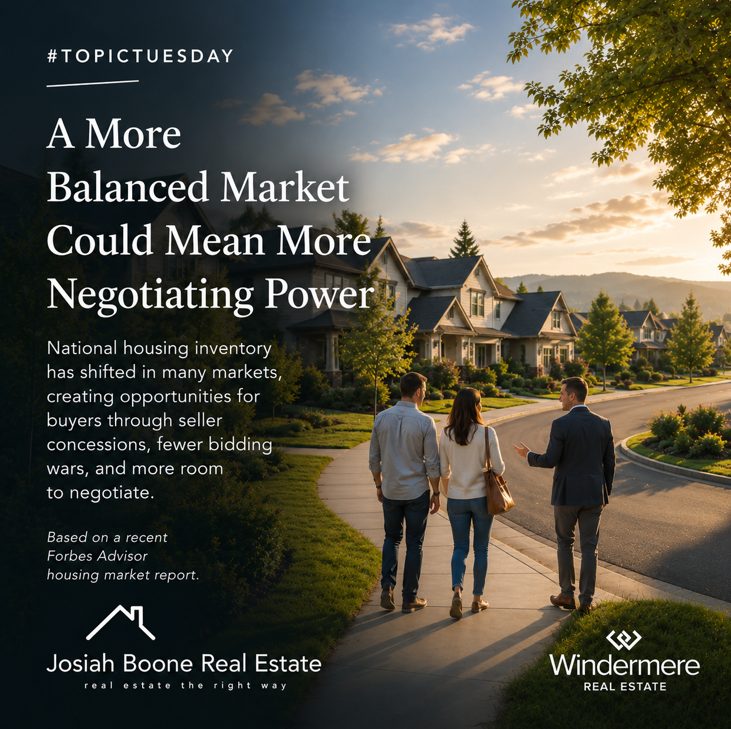
Over the past few years, many buyers became accustomed to moving quickly, competing with multiple offers, and making difficult decisions under tight timelines. Today’s market is beginning to look different.
According to a recent Forbes Advisor report, national new home listings have declined, yet many buyers continue to benefit from conditions that offer greater flexibility during negotiations. In many areas, homes are remaining on the market longer, bidding wars have become less common, and sellers are increasingly willing to offer concessions such as closing cost assistance or repair credits.
One important takeaway from the report is that housing is becoming increasingly local. A national headline doesn’t necessarily reflect what’s happening in Spokane, Coeur d’Alene, or even within individual neighborhoods. Some communities continue to experience strong demand while others are seeing a more balanced relationship between buyers and sellers.
For buyers, this creates an opportunity to approach the process with preparation rather than urgency. Understanding financing, having a clear picture of your priorities, and working with current local market information can often lead to stronger negotiating positions than many people expect.
For sellers, today’s market serves as a reminder that thoughtful pricing and excellent presentation continue to matter. Well-prepared homes are still attracting strong interest, while buyers often have more choices than they did just a few years ago.
One reason I enjoy following these reports is that they remind us how quickly markets evolve. The assumptions that worked two or three years ago don’t always apply today.
If you’re curious how these national trends compare with what’s happening in Spokane, Mead, Colbert, Spokane Valley, Liberty Lake, or Coeur d’Alene, I’d be happy to walk through the current local data and what it could mean for your next move.
“Act as if what you do makes a difference. It does.”
William James
This is the thought I’m carrying into the week.
It is easy to underestimate the ordinary parts of life. The small choices. The tone we bring into a conversation. The way we follow through. The extra bit of patience we offer when it would be easier not to.
Most of those moments do not feel very important while they are happening.
But they add up.
I think that is why this quote lands so well on a Monday. It reminds me that the week ahead does not need to be dramatic to count. There will be work to do, people to respond to, decisions to make, and plenty of moments where attitude matters more than we probably realize.
This week, I’m trying to remember that what I do has weight, even when I cannot immediately see the result.
That does not mean carrying everything like a burden. It simply means showing up with a little more care. It means not dismissing the small things just because they feel routine. It means remembering that consistency, kindness, effort, and attention can quietly shape the direction of a day.
And sometimes, the direction of a day can shape more than we expected.
So that is my reminder this week.
Act like what you do makes a difference.
Because it does.
What we do this week matters, even when the results are not immediately visible.
Last week’s Topic Tuesday about outdoor living generated a lot of interest and conversations. It seems many homeowners and buyers recognize that outdoor spaces have become much more than a backyard. They’re now an important part of how we enjoy our homes.
With that in mind, I wanted to follow up with another Topic Tuesday highlighting some of the outdoor living features buyers are seeking most today, based on a recent Forbes article examining current homeowner and buyer preferences.
For years, outdoor living spaces have been growing in importance. What began as a nice bonus has become a major factor in how buyers evaluate a home.
A recent study highlighted by Forbes found that homeowners continue to place a high value on outdoor environments that feel welcoming, functional, and easy to maintain. Landscaping, gathering spaces, and usable outdoor rooms remain at the top of many wish lists.
One trend stands out: buyers are looking beyond square footage. They are paying attention to how a property supports everyday living.
A thoughtfully designed backyard can become an extension of the home itself.
Features that continue to attract attention include:
• Comfortable patios and seating areas
• Fire pits and gathering spaces
• Outdoor kitchens and grilling stations
• Covered outdoor living areas
• Mature trees and attractive landscaping
• Low-maintenance designs that require less upkeep
Real estate experts also note that functional outdoor spaces often provide strong returns because buyers can immediately envision themselves enjoying the space. A patio with comfortable seating or a backyard designed for entertaining creates an emotional connection that an empty lawn simply cannot match.
The good news is that creating an appealing outdoor space does not always require a major renovation. Simple improvements such as adding seating areas, updating landscaping, improving lighting, or defining outdoor gathering zones can have a noticeable impact.
As summer settles into Spokane and Coeur d’Alene, outdoor living becomes one of the most enjoyable parts of homeownership. Whether you’re planning to stay for years or considering a future sale, investing in a welcoming outdoor environment is one of the best ways to enhance both enjoyment and buyer appeal.
If you’re curious which outdoor improvements make the most sense for your property, I’d be happy to share ideas specific to your home and neighborhood.
Source: Forbes, June 2026 Outdoor Living Trends Study.
Top Outdoor Features Buyers Want in 2026 A recent Forbes study found that buyers continue to place a premium on outdoor spaces that feel welcoming, functional, and easy to maintain. From patios and fire pits to outdoor kitchens and mature landscaping, today’s buyers are looking for outdoor areas that extend the living space beyond the walls of the home.
“Do what you can, with what you have, where you are.”
Theodore Roosevelt
I like this quote because it feels practical.
It does not ask for ideal timing. It does not pretend everything has to be perfectly organized before we begin. It simply brings the focus back to what is actually in front of us.
That is the reminder I’m taking into this week.
There are always reasons to wait. Sometimes waiting is wise. But there is also a kind of waiting that is really just uncertainty wearing a more respectable coat. I know I can fall into that. I want the plan to be clearer before I start. I want the right moment to announce itself. I want more information than I probably need.
But most progress does not begin that way.
Most progress begins by taking the next honest step from where we already are.
That might be a small decision, a conversation, a task that has been sitting too long, or a little bit of attention given to something that keeps getting pushed aside. It does not have to be dramatic to matter.
This week, I’m trying to keep the question simple.
What can I do with what I have, right where I am?
That question has a way of cutting through some of the noise. It moves the focus away from perfect conditions and back toward faithful action.
Wherever this Monday finds you, I hope you find one good step to take today.
Outdoor Living Is Taking Center Stage for Homebuyers in 2026
For many buyers, the idea of home has expanded beyond the walls of the house.
A kitchen, living room, and primary suite still matter, of course. But increasingly, buyers are also thinking about the spaces just outside the back door.
A recent Green Builder Media article reported that outdoor living spaces ranked as the most desired emerging home feature in its 2026 consumer data. That finding says quite a bit about how people are thinking about home right now.
Outdoor space is no longer treated as a small bonus. For many buyers, it has become part of everyday living.
That might mean a covered patio for morning coffee, a low-maintenance deck for summer dinners, a garden, a fire pit, a barbecue area, or a backyard that gives kids, pets, friends, and family a place to gather.
In Spokane and Coeur d’Alene, this trend feels especially relevant. We live in a region where the seasons shape how people use their homes. A well-designed outdoor space can extend the way a home functions during spring, summer, and fall, while creating a natural place to enjoy the surrounding landscape.
The appeal is not just about entertaining. Outdoor spaces often support the quieter parts of life too. A shaded patio, a comfortable chair, or a peaceful garden can change how a home feels at the end of a long day.
For sellers, this is a useful reminder that outdoor presentation matters. A clean patio, comfortable seating area, fresh landscaping, and good lighting can help buyers imagine how they would actually live in the home.
For buyers, it is worth thinking carefully about how a property’s outdoor space fits your daily routine. Some people want room to garden. Others want privacy, space for gatherings, or a low-maintenance area that feels easy to enjoy.
Outdoor living does not have to mean elaborate or expensive. Often, the best spaces are the ones that feel natural, comfortable, and easy to use.
As buyer preferences continue to shift, outdoor living is becoming one of the clearest examples of a larger trend: people are not just looking for more square footage. They are looking for homes that support how they want to live.
In Spokane, Coeur d’Alene, and throughout the Inland Northwest, that often includes a place to step outside, slow down, and enjoy the space around home.
Outdoor living spaces are becoming one of the most desired features for today’s homebuyers.


 Facebook
 X
X
 Pinterest
 Copy Link